Cortney Cassidy is an artist and horticulturist using text, image, and sound to write poetry.
Hire me
Designer of the modern dark mode, architect of dynamic theming, former editor for Google Design, and design ethics advocate. I worked as a horticulturist for the High Line during a career break followed by a sabbatical to write a book (forthcoming). If you are interested in engaging with my multidisciplinary hybrid practice that balances artistic sensibility with strategic clarity for your project, send me a message at cortneyvcassidy@gmail.com.
Receive mail
To sign up for Mail Blog send correspondence to PO BOX 320032, Brooklyn, NY 11232 or mailblog@mailbox.org — Mail Blog is sent around the world and is always free. Trades or donations are not required but happily accepted.
“If you are in a fragile or stressed state, it may help to think of yourself as a garden. The more attention you give your unseen garden, the more you may come to understand it. Every act of feeding, digging, and pruning will reveal a new truth.”
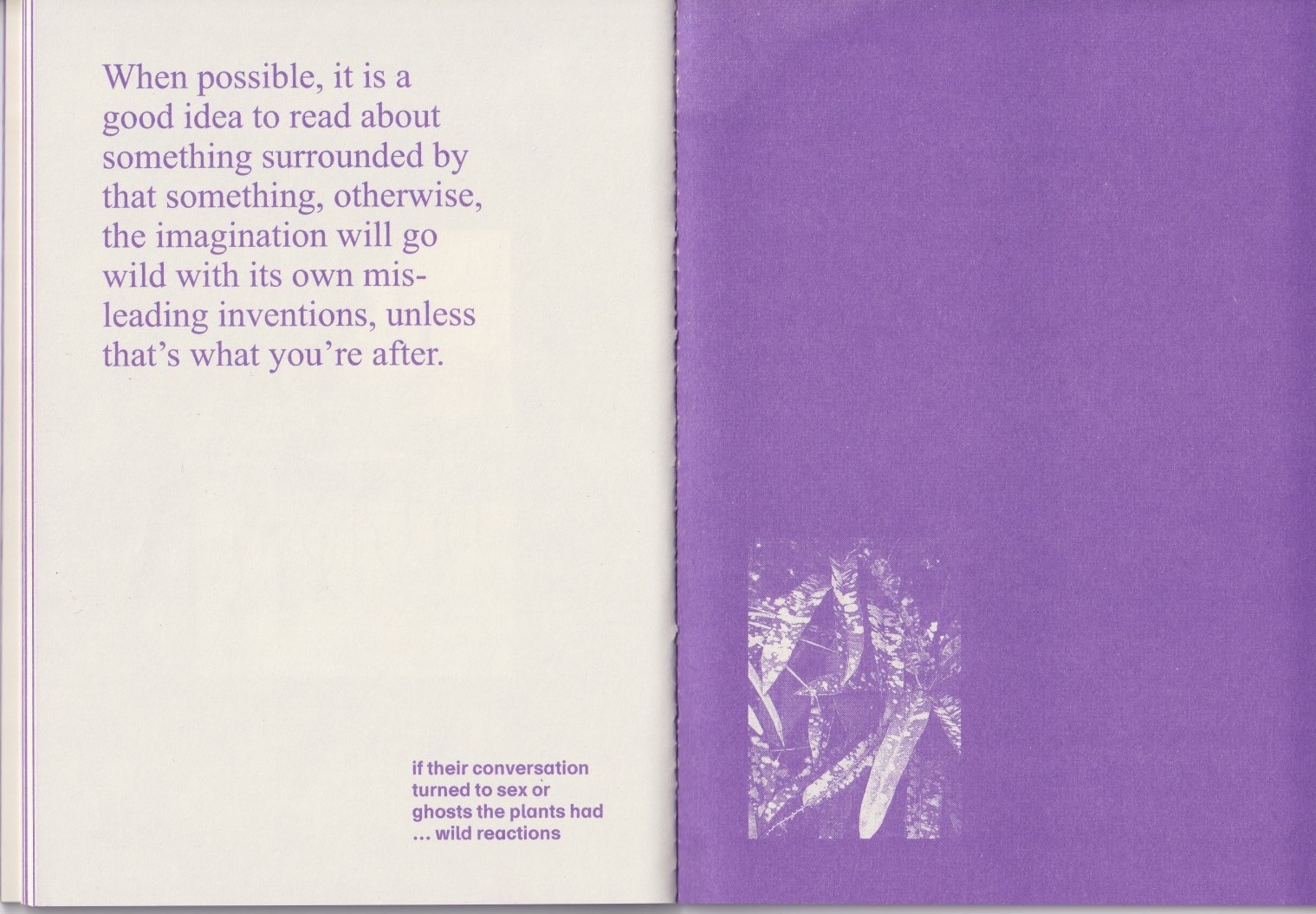
“I knew that something was wrong with the way I used my body. On the computer, I was only using my mind. The garden helped me identify that I needed to engage my whole being: mind, body, and spirit. I needed these three pillars to hold me up, instead of trying to balance everything on one.”
A Pious Work of Salvage is an ongoing project to build a singular portrait using found fragments.
first presented in a Virginia Commonwealth University grad seminar guest lecture, 2024
“Leonardo da Vinci wrote that an image is poetry seen not felt, however, a maker of images that abandons true nature for false beauty is unable to make anyone see.”
“Written language has a long history of influencing feeling and thought. In our current era, we often rely on images to evoke emotion … The future of accessing visual media is not only about who or what makes the images, it’s also about how we describe them.”
“Language is a product of observational learning, so gaining the vocabulary requires first noticing the smell, the environment around that smell, and the reactions it prompts. There doesn’t seem to be any way to represent smell other than to physically present it or describe what kind of attention it attracts.”
“Terms like spinster and old maid are still attached to women who exist outside the Home and the Church, declaring that these women disrupt social order and can no longer be called women. I can’t think of a more comfortable, self-reliant life for myself than that of a woman who holds onto her autonomy”
“It is impossible for most to write well on a first try. Excessive language is how a writer digs for the actual point they can eventually say better. I must say a lot of useless things to find out what I’m really trying to say. The useless is useful even after it’s gone.”
“Feelings are ignored and overlooked as potential evidence-based resources, but since they are a part of the human experience, it seems possible that they are essential tools in both the construction of our world and our understanding of it. Using that tool to access possible alternatives might help us fix what’s not working.”
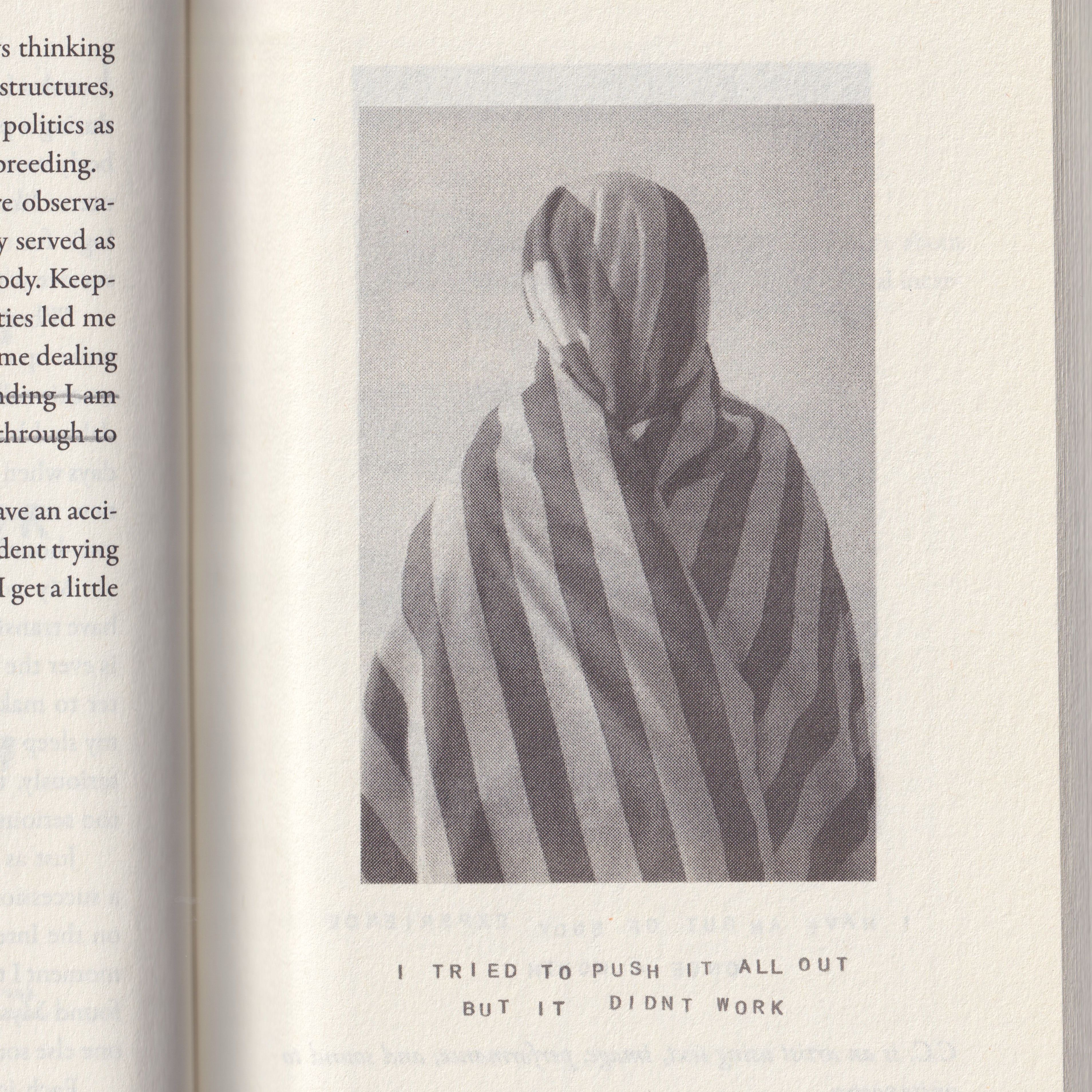
“Keeping an unserious record of my mysterious sensitivities led me to see patterns, like how I seem to have an easier time dealing with my body when I am alone, instead of pretending I am “normal” while my internal reality slowly bleeds through to the external reality of a very long work meeting.”
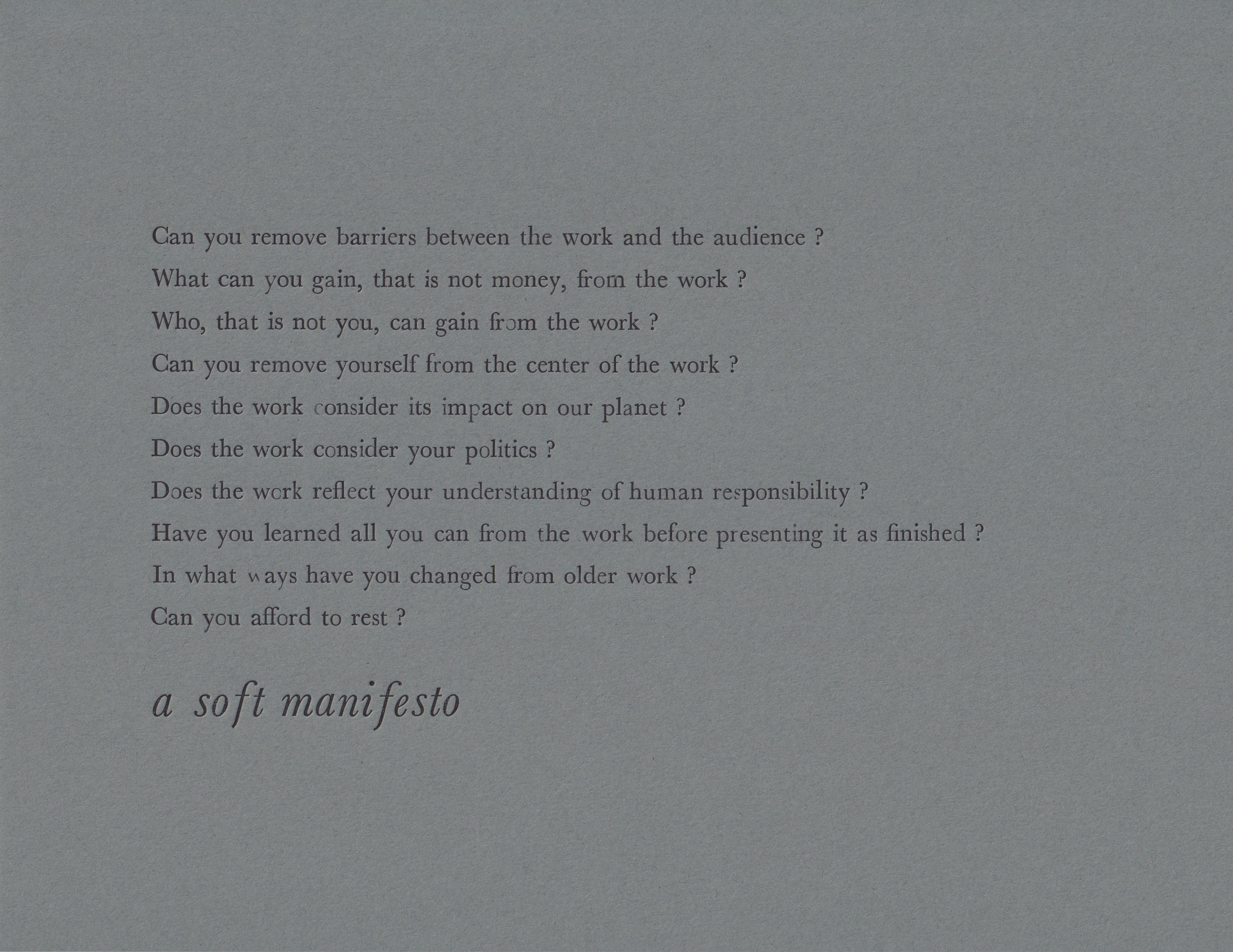
“The hard truth about being an artist within an economic system that favors private property, a price system, and competitive markets is that the artist often needs full-time paid work to exist. That job takes valuable time and creativity away from the artist, which means this system defines who gets to be an artist and when.”
“Through forming my framework to create in, the return investment is not a monetary profit. The gain is my revolutionized vocabulary of art in a softer space.”
“Black and white, yellow, red, and blue preserve their relationship with light through the scales of tones between their lightest and darkest. The continuous scale does not change in saturation, but changes in brilliance. As all colors we can and cannot see differ depending on their surface, surrounding, and our state of mind—they will always in some way share their brilliance.”
“The more I learn, the more humility I feel. By expanding our exposure to ethical thinking, we can better understand who we are, what we could and should be doing, and why we’re doing the things we do. With that self-awareness, we’re in a much better place to understand where we can be most effective.”
slice chicken breast, salt & pepper, pan fry, dice, pre-measure individual serving size into separate small containers. Cook enough for 3 days, if you want to cook for a whole week, store days 4-7 in the freezer. Remove each day's portion from the freezer in the morning so it is defrosted by meal time.
pour water into pan immediately after cooking chicken, cook the brown bits into a broth, mix together into single serving jars equal parts soy sauce and preferred amount of chili garlic sauce.
dice big white onion, store in medium container. scoop out portion sizes as needed.
mince garlic cloves, store in small jar. scoop out portion sizes as needed.
dice peppers, store in medium container. scoop out portion sizes as needed.
dice squash, store in medium container. scoop out portion sizes as needed.
store pre-washed leafy greens of choice OR self-wash ahead of time. grab a handful as needed.
pre-steam veggies of choice (green beans, broccoli, asparagus) choose a different veggie each week if variety is desired, store in medium container. scoop out portion sizes as needed.
cook rice in rice cooker, the most convenient and consistent method. i prefer cooking just enough fresh rice daily instead of reheating pre batch-cooked rice.
Recipe
Add 1 tsp cornstarch to soy sauce mixture, stir, and mix with single serving of diced chicken and set aside on counter while veggies cook in the next steps.
Heat stainless steel pan on medium-high, it is hot enough when water beads up and rolls around. turn heat to low for the rest of the steps.
Pour in olive oil, enough to coat the bottom of pan.
Add 1/4 cup onions to pan, cook until soft (a minute or so). Add in some minced garlic and tomato paste if you are making pasta, although skip the soy sauce mixture
Add 1/4 cup peppers to pan, cook until soft (another minute or so)
Add 1/4 cup of each uncooked veggies (squash, eggplant) one at a time to pan in order of hardest to softest, cook until softish (a couple minutes depending on veg)
Add 1/4 cup of each pre-cooked veggies (green beans, asparagus) one at a time to pan in order of hardest to softest, cook until warm (a minute or so)
Add a handful of pre-wash leafy greens (baby spinach, baby kale), cook until wilted (a minutes or so). If using tomato, add in here since they don't need very long
Add the chicken with sauce and stir until warm. Alternatively scramble 2-3 eggs and serve with veggies and toast (without rice or pasta)
Serve with fresh rice
Adaptations
Pasta: add tomato paste and minced garlic once onions are soft; chop and add cherry tomatoes; skip the soy sauce mix
Soup: save extra "broth" and pour into the pan once all veggies and protein are cooked and warm; let it simmer for a bit
Scramble: skip the chicken or other protein and add scrambled eggs to veggies; season to taste
Burrito: skip the rice and wrap everything in a large flour tortilla; or as tacos in corn tortillas
Savory pie: skip the rice and prepare a pie tin with crust, fill with the veggie and protein mix, cover with another pie crust and bake